
“WE SHEARED OUR GOATS WITH OUR PATIENCE,
SO OUR FRIENDS MAY REJOICE AND OUR ENEMIES BURST WITH ENVY”
H iking in Chios is closely connected to the timeless activity of shepherds, an activity etched into the landscape through dozens of paths created by the endless movement of flocks. Often, along these routes, we encounter various dry-stone structures that were once vital to shepherds and, although no longer in use today, continue to enrich the beauty of our walks. Our affection for shepherds is deep.
Among the most beloved is Giannis Skoufalos, the iconic modern shepherd of Aepos, always wearing his characteristic “Smyrnia” headscarf. A warm and perceptive person who sometimes seems reserved—not out of eccentricity, but out of respect for an unwritten code that calls for the hard work and the flock to be protected from prying eyes. In the past, being invited to the shearing at Skoufalos’ place was considered a special honor among shepherds. That is why my joy was doubled when, after a blessed coincidence, I found myself with my daughter Mariza at his sheepfold on July 20, 2025, watching the goat shearing up close.
Outside the sheepfold on Aepos, around fifteen trucks were parked. We approached hesitantly; the dogs did not know us and barked at us. The surrounding area was filled with sacks of animal feed, tools, machinery, milk containers, and tanks, while the noise of the generator drowned out every other sound and made conversations difficult.
I had heard that other shepherds help during the “Skoufalos shearing,” but I did not expect such a large gathering. Women, children, even a baby just a few months old, along with about twenty-five livestock farmers shearing countless goats. Giannis Skoufalos was away on an errand. The first familiar face I met was Giannis Boulas. I wanted to capture the moments. Boulas signaled for me to wait, coordinated with Dimitris, the family’s youngest son, and then led us to the area where his sister, Stavrini, was shearing with scissors.
H iking in Chios is closely connected to the timeless activity of shepherds, an activity etched into the landscape through dozens of paths created by the endless movement of flocks. Often, along these routes, we encounter various dry-stone structures that were once vital to shepherds and, although no longer in use today, continue to enrich the beauty of our walks. Our affection for shepherds is deep.
Among the most beloved is Giannis Skoufalos, the iconic modern shepherd of Aepos, always wearing his characteristic “Smyrnia” headscarf. A warm and perceptive person who sometimes seems reserved—not out of eccentricity, but out of respect for an unwritten code that calls for the hard work and the flock to be protected from prying eyes. In the past, being invited to the shearing at Skoufalos’ place was considered a special honor among shepherds. That is why my joy was doubled when, after a blessed coincidence, I found myself with my daughter Mariza at his sheepfold on July 20, 2025, watching the goat shearing up close.
Outside the sheepfold on Aepos, around fifteen trucks were parked. We approached hesitantly; the dogs did not know us and barked at us. The surrounding area was filled with sacks of animal feed, tools, machinery, milk containers, and tanks, while the noise of the generator drowned out every other sound and made conversations difficult.
I had heard that other shepherds help during the “Skoufalos shearing,” but I did not expect such a large gathering. Women, children, even a baby just a few months old, along with about twenty-five livestock farmers shearing countless goats. Giannis Skoufalos was away on an errand. The first familiar face I met was Giannis Boulas. I wanted to capture the moments. Boulas signaled for me to wait, coordinated with Dimitris, the family’s youngest son, and then led us to the area where his sister, Stavrini, was shearing with scissors.
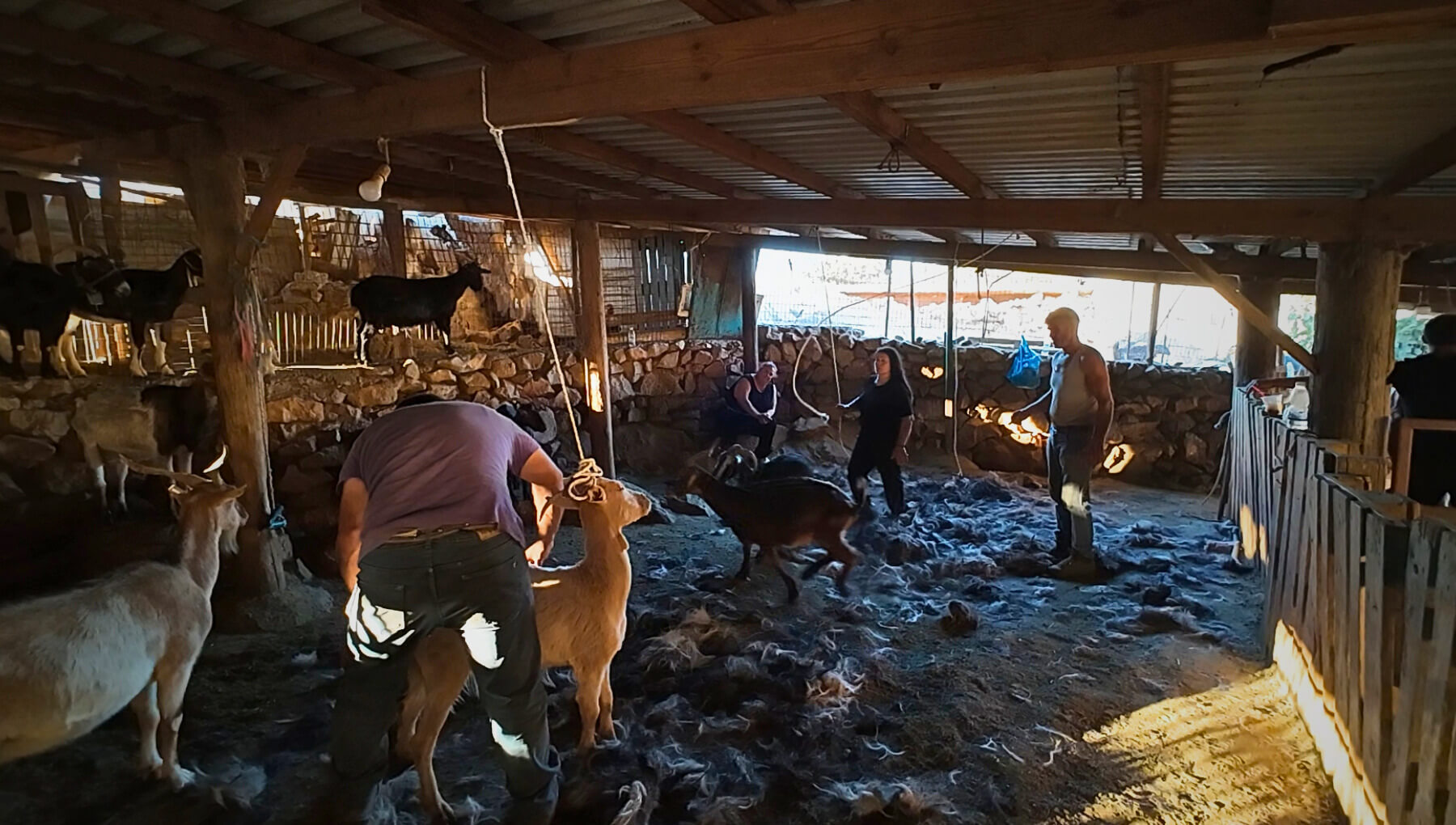
📷 Stratos, Maria, Stavrini and Giannis.
With her were her friend Maria—the only women shearing—Giannis from Vessa, and Skoufalos’ eldest son, Stratos, who at the time was president of the Chios Shepherds’ Association. I greeted them and, spontaneously, like an ignorant beginner, asked Stratos, “How many goats are there?” Before I could even finish the sentence, I answered myself: “What am I asking? You don’t say that,” since any such reference is considered bad luck. “There are many people here,” I commented to Stavrini. “This year we are few. In the past, we were seventy pairs of shears,” she replied.
Nowadays, around ten flocks are sheared collectively in Aepos, Pityos, Lagada at Viki, Fyta, and elsewhere. In earlier times, when there were more shepherds but fewer animals, collective shearings were more frequent. The shepherds of Vrontados would travel by mule and donkey to the stone sheepfolds in Aepos, Egisa, and Amygdalia, and after finishing the shearing, they would set up an improvised outdoor feast with goat pilaf and a bottle of raki. A metal tin would keep the rhythm for songs and dances, and when the celebration reached its peak, they would wish for the goats “to multiply” the following year and knock down a section of the stone sheepfold so it could be rebuilt larger.
With her were her friend Maria—the only women shearing—Giannis from Vessa, and Skoufalos’ eldest son, Stratos, who at the time was president of the Chios Shepherds’ Association. I greeted them and, spontaneously, like an ignorant beginner, asked Stratos, “How many goats are there?” Before I could even finish the sentence, I answered myself: “What am I asking? You don’t say that,” since any such reference is considered bad luck. “There are many people here,” I commented to Stavrini. “This year we are few. In the past, we were seventy pairs of shears,” she replied.
Nowadays, around ten flocks are sheared collectively in Aepos, Pityos, Lagada at Viki, Fyta, and elsewhere. In earlier times, when there were more shepherds but fewer animals, collective shearings were more frequent. The shepherds of Vrontados would travel by mule and donkey to the stone sheepfolds in Aepos, Egisa, and Amygdalia, and after finishing the shearing, they would set up an improvised outdoor feast with goat pilaf and a bottle of raki. A metal tin would keep the rhythm for songs and dances, and when the celebration reached its peak, they would wish for the goats “to multiply” the following year and knock down a section of the stone sheepfold so it could be rebuilt larger.
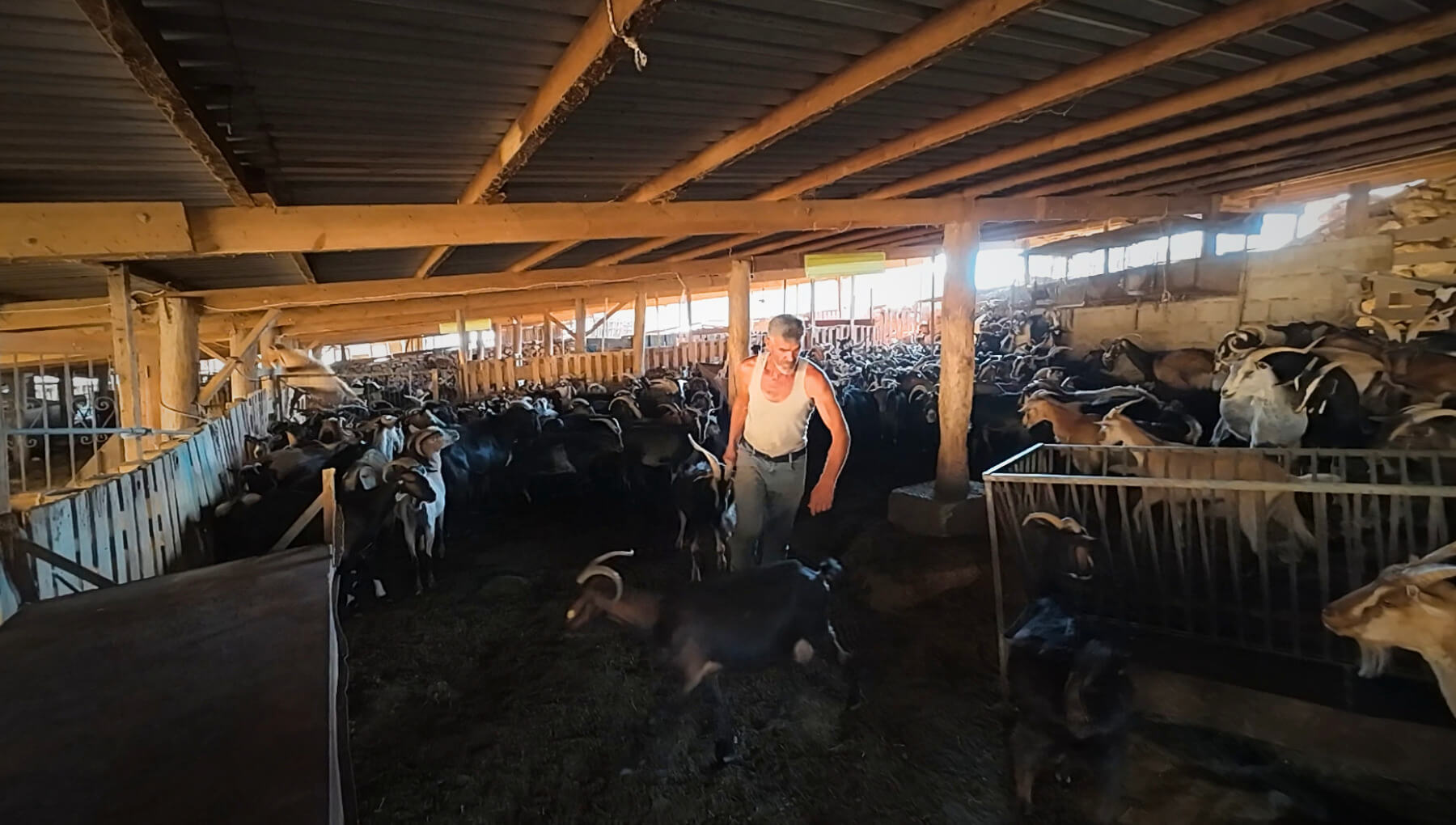
📷 Giannis brings out a goat for shearing.
I observed the spaces of the sheepfold. In two inner “rooms” the goats had been gathered, while in three others, near the exit, the shepherds were shearing—most with large scissors and a few with electric clippers. The ground was muddy and covered with hair; the air was filled with floating fibers and a strong smell. Outside were sheep, pigs, free-roaming chickens, a sofa, and the family’s small house: an authentic modern livestock installation on Aepos in all its grandeur.
At intervals, mostly younger shepherds entered the inner rooms to guide the goats toward the shearing area. With shouts and gestures they created an impressive “choreography” to make them “face forward” toward the exit. Every now and then someone swept the hair away. Today it is discarded, but in the past wool had value, so it was collected and sold. “They used to make woolen bags and carpets,” they explained to me, “and the shearing expenses—the drinks—were covered by the hair and the wool.”
I observed the spaces of the sheepfold. In two inner “rooms” the goats had been gathered, while in three others, near the exit, the shepherds were shearing—most with large scissors and a few with electric clippers. The ground was muddy and covered with hair; the air was filled with floating fibers and a strong smell. Outside were sheep, pigs, free-roaming chickens, a sofa, and the family’s small house: an authentic modern livestock installation on Aepos in all its grandeur.
At intervals, mostly younger shepherds entered the inner rooms to guide the goats toward the shearing area. With shouts and gestures they created an impressive “choreography” to make them “face forward” toward the exit. Every now and then someone swept the hair away. Today it is discarded, but in the past wool had value, so it was collected and sold. “They used to make woolen bags and carpets,” they explained to me, “and the shearing expenses—the drinks—were covered by the hair and the wool.”
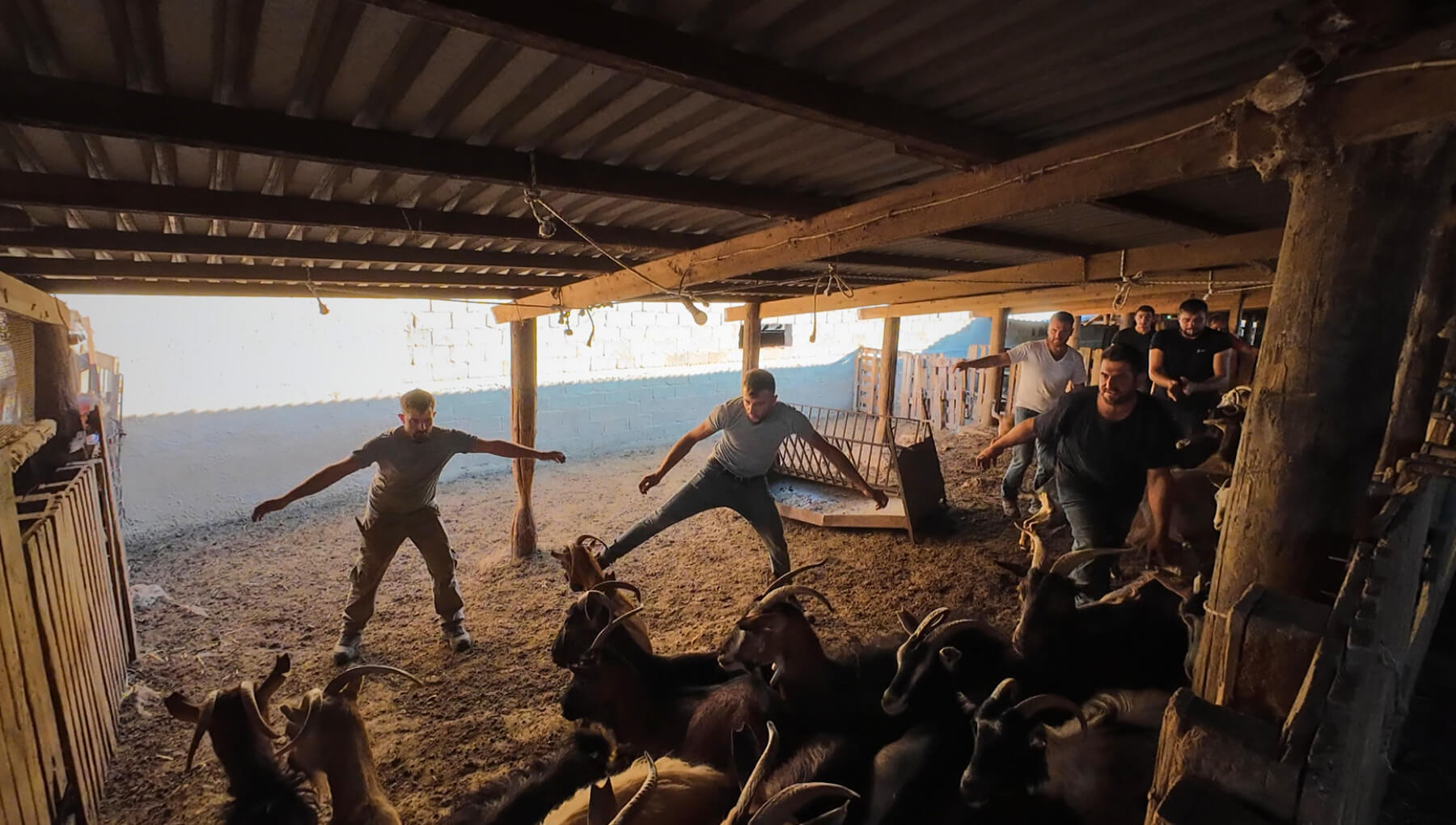
📷 Shepherds, shouting loudly, guide the goats into the rooms where the shearing took place.
The work was demanding, yet the atmosphere was warm and welcoming. Jokes and songs from Stavrini and Maria were never missing, while the women of the family offered us water, soft drinks, and sweets. As the hours passed, the breaks became more frequent and the fatigue showed on their faces and hands. It was already seven in the evening—they had started at three in the afternoon. “Giannis, come tie this better for me,” said Stavrini. “This type of tying is called havia,” Giannis explained to me.
The children—Nikolas, Ioanna, and Marinos—would sometimes stand beside Stratos to try the scissors themselves, “so they can learn,” and at other times they played with a small kid goat. At one point, Stavrini found a calm goat and called Mariza to shear it, so she could experience it too. “Now that you’ve learned, you should come again next year to shear.”
The work was demanding, yet the atmosphere was warm and welcoming. Jokes and songs from Stavrini and Maria were never missing, while the women of the family offered us water, soft drinks, and sweets. As the hours passed, the breaks became more frequent and the fatigue showed on their faces and hands. It was already seven in the evening—they had started at three in the afternoon. “Giannis, come tie this better for me,” said Stavrini. “This type of tying is called havia,” Giannis explained to me.
The children—Nikolas, Ioanna, and Marinos—would sometimes stand beside Stratos to try the scissors themselves, “so they can learn,” and at other times they played with a small kid goat. At one point, Stavrini found a calm goat and called Mariza to shear it, so she could experience it too. “Now that you’ve learned, you should come again next year to shear.”
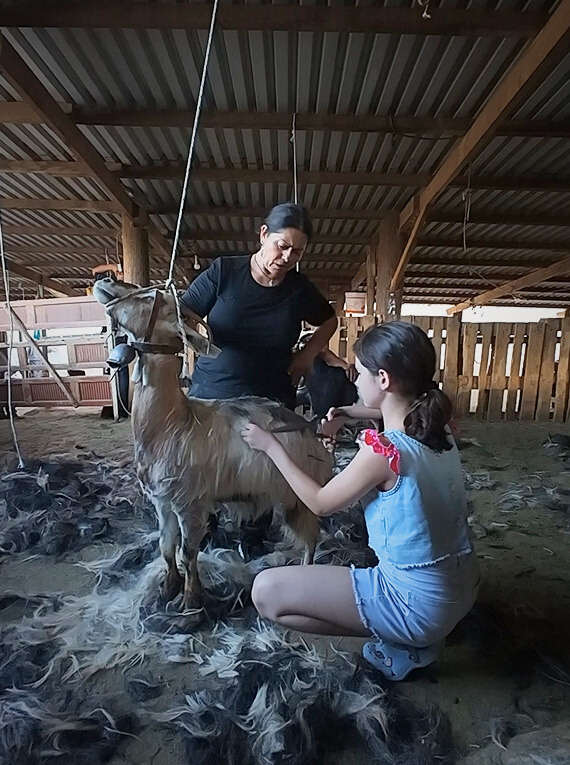
📷 Mariza, under Stavrini’s supervision, shears a goat.
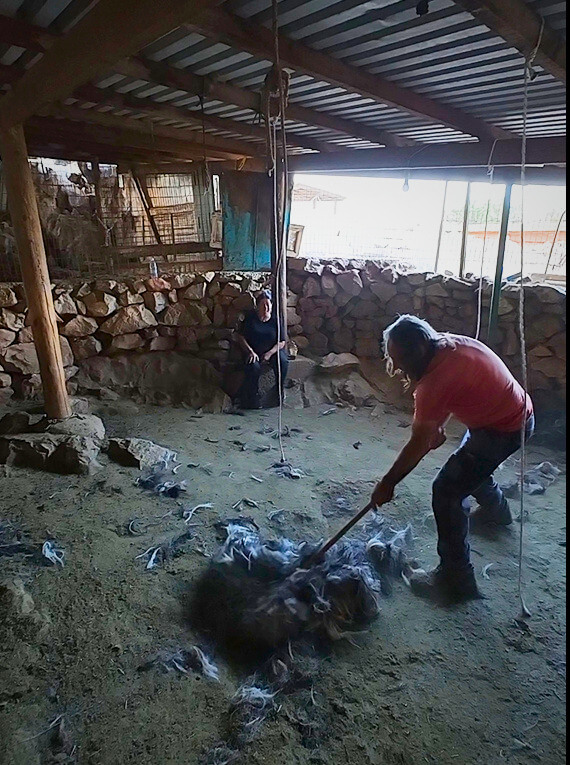
📷 Vasilis sweeps the cut goat hair.
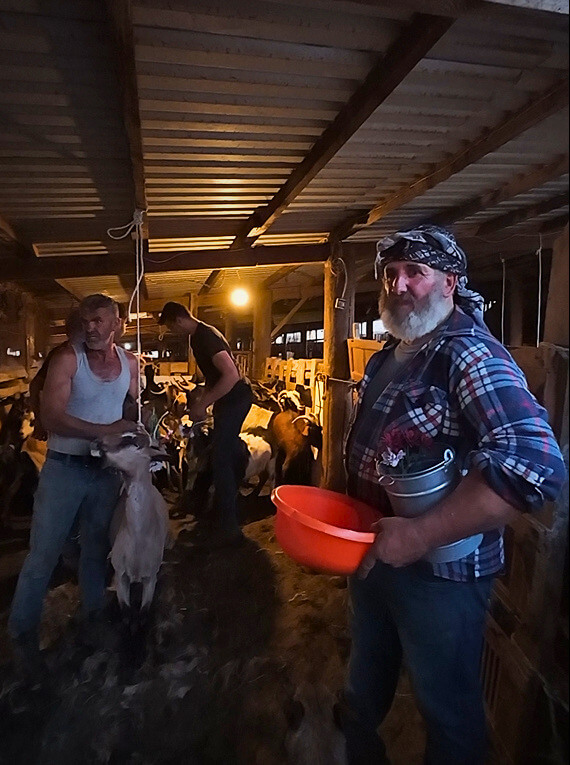
📷 Giannis Skoufalos with the bread soaked in wine, carnations, and garlic.
Little by little, the sheepfold was emptied of goats. Only “the sparse-haired ones won’t be sheared.” Giannis Skoufalos had returned and was preparing for the traditional ritual that marks the completion of the shearing of goats and sheep. He brought a bowl of bread soaked in wine, dipped his hand into it, filled his palm, and scattered it over the remaining goats “to bless them.” Then he brought a bucket with bunches of carnations and garlic and called the children to tie them to the goats’ right horns “so the evil eye won’t affect them.” He also told Giannis Boulas to do the same, “he is the eldest of all of us and we must respect him.”
Together with Dimitris, they opened the gate to let the last animals leave. “Where are they going now?” I asked him. “They know,” he replied briefly. To me, he looked happy, filled with deep satisfaction. The work had been done and the traditions had been honored. He pointed to the taps outside the sheepfold and called out, “Wash up and head to Flori,” giving the signal for the end of a demanding day, successfully completed thanks to the solidarity of his fellow shepherds.
Little by little, the sheepfold was emptied of goats. Only “the sparse-haired ones won’t be sheared.” Giannis Skoufalos had returned and was preparing for the traditional ritual that marks the completion of the shearing of goats and sheep. He brought a bowl of bread soaked in wine, dipped his hand into it, filled his palm, and scattered it over the remaining goats “to bless them.” Then he brought a bucket with bunches of carnations and garlic and called the children to tie them to the goats’ right horns “so the evil eye won’t affect them.” He also told Giannis Boulas to do the same, “he is the eldest of all of us and we must respect him.”
Together with Dimitris, they opened the gate to let the last animals leave. “Where are they going now?” I asked him. “They know,” he replied briefly. To me, he looked happy, filled with deep satisfaction. The work had been done and the traditions had been honored. He pointed to the taps outside the sheepfold and called out, “Wash up and head to Flori,” giving the signal for the end of a demanding day, successfully completed thanks to the solidarity of his fellow shepherds.
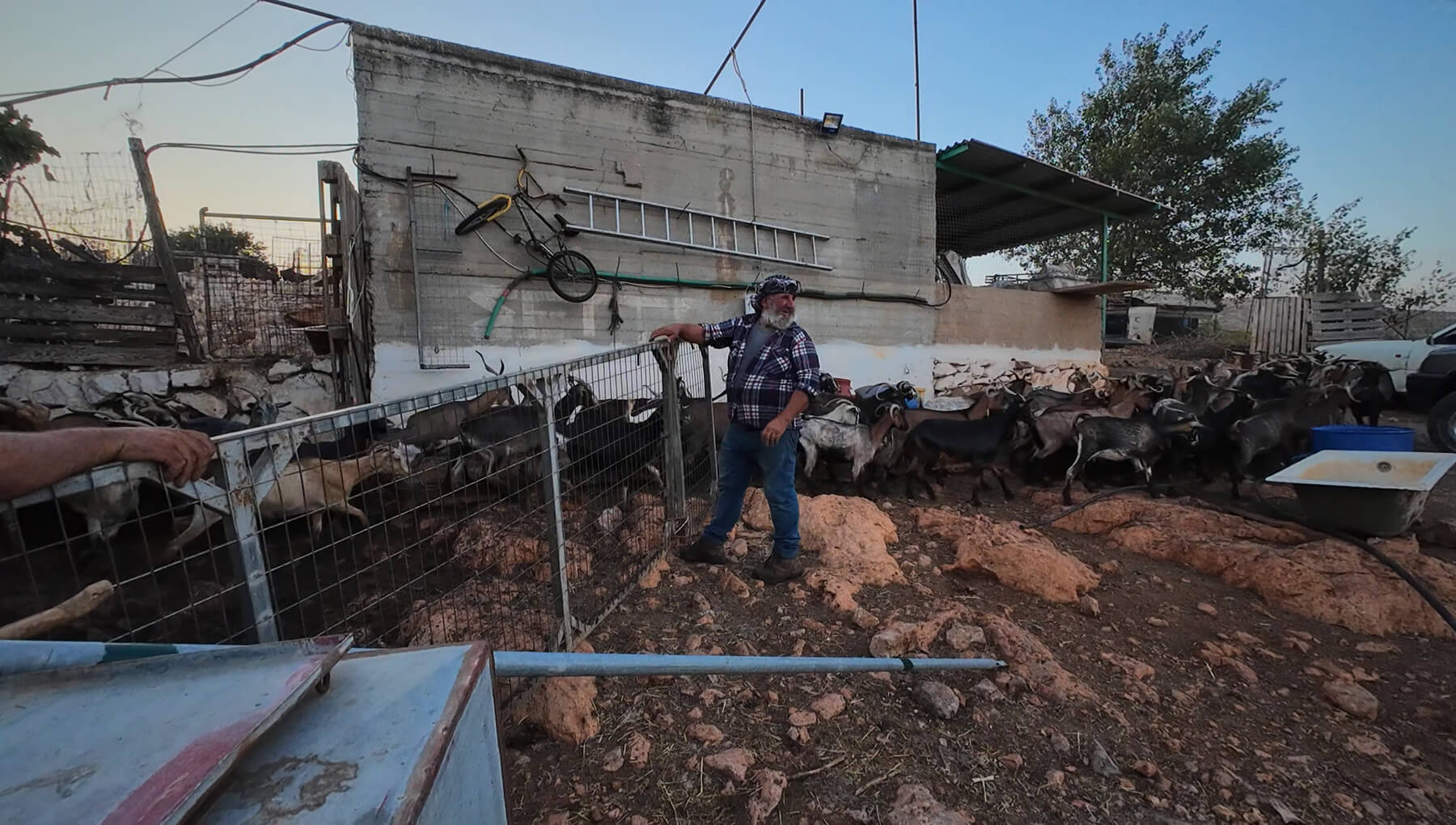
📷 Giannis Skoufalos opens the gate to let the goats out, marking the end of the shearing.
The shepherds climbed into their trucks; we too got onto the back of Vasilis’ pickup and headed to Flori. Some, before sitting at the long benches in the church courtyard, went into Saint George’s church to pay their respects. The women of the family brought goat pilaf, various other dishes, and drinks. A large group—around fifty people—sat together. The mood was warm and kind, though not as festive as in other years. And when, late at night, just before midnight, some of the shepherds began to sing softly, every song carried a pain, a shadow of mourning that covered the joy.
Dedicated to Petros, who left too soon.
The shepherds climbed into their trucks; we too got onto the back of Vasilis’ pickup and headed to Flori. Some, before sitting at the long benches in the church courtyard, went into Saint George’s church to pay their respects. The women of the family brought goat pilaf, various other dishes, and drinks. A large group—around fifty people—sat together. The mood was warm and kind, though not as festive as in other years. And when, late at night, just before midnight, some of the shepherds began to sing softly, every song carried a pain, a shadow of mourning that covered the joy.
Dedicated to Petros, who left too soon.